Overview

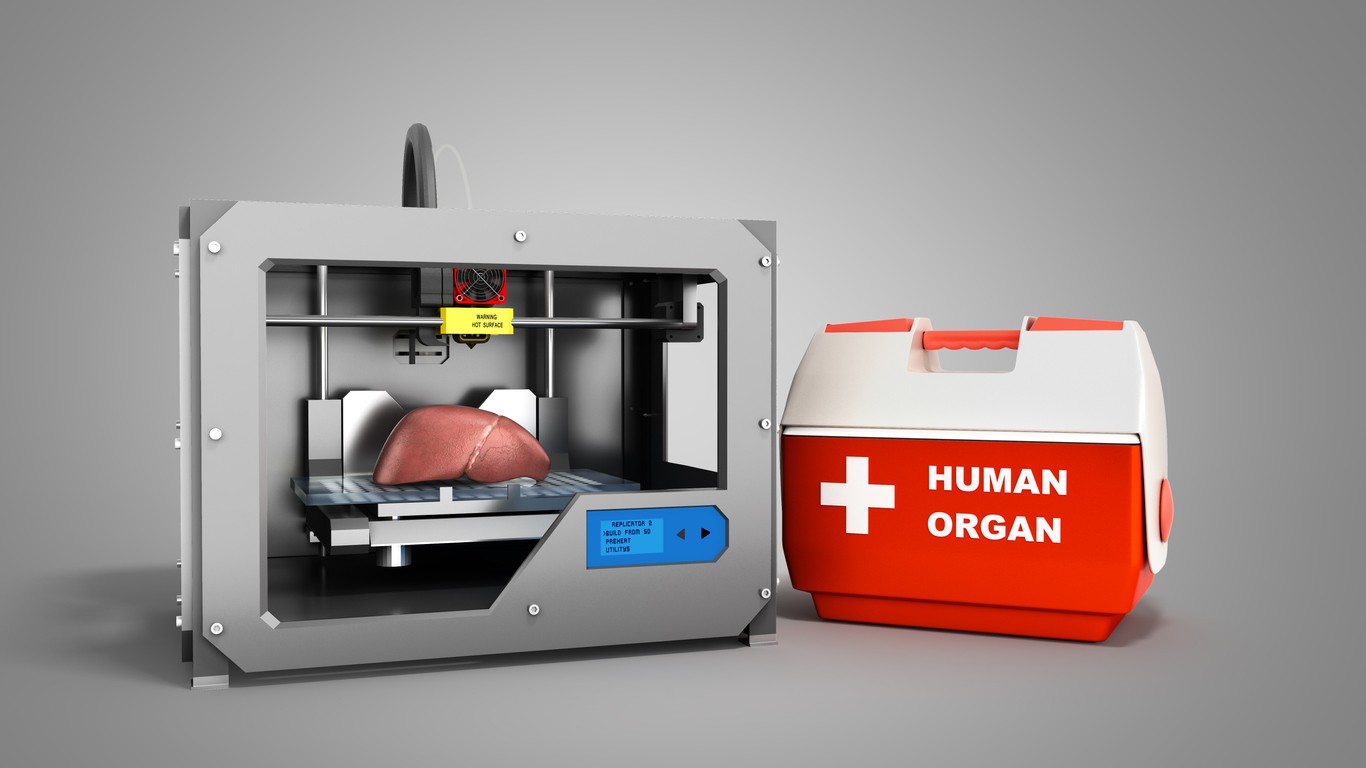
3D bioprinting involves the creation of three-dimensional structures that mimic natural tissues by utilising bio-inks mixed with living cells. This innovative technology allows researchers to study human body functions in vitro, with bioprinted structures proving to be more biologically relevant than those created in two dimensions. The potential applications of 3D bioprinting include tissue engineering, bioengineering, materials science, pharmaceutical development, and organ creation. Its ability to mimic natural tissue structures accurately offers a significant advantage in medical research and development.

The 3D bioprinting market is projected to expand significantly, with an estimated worth of USD 11.2 billion by 2027 and a compound annual growth rate of 22.2%.

This growth is primarily attributed to the increasing demand for customised medical solutions, research and development initiatives in 3D bioprinting, collaborations with pharmaceutical and medical device companies, and government funding.

Drivers:

The market for 3D healthcare bioprinting is growing rapidly, driven by many factors, including:

  • Increasing demand for personalised medical devices: The innovative technique of 3D bioprinting offers the possibility of crafting medical devices that are tailor-made to address the unique requirements of each patient. Unlike conventional manufacturing approaches that churn out standardised devices with limited customisation, 3D bioprinting enables the creation of personalised solutions optimised for individual patients. This cutting-edge methodology could revolutionise the medical industry and improve patient outcomes.
  • Growing need for tissue and organ regeneration: 3D bioprinting can potentially transform the medical industry drastically. This technology makes it possible to create customised scaffolds that contain living cells. These scaffolds can then regenerate tissues and entire human body organs. This groundbreaking advancement could offer new hope to individuals suffering from chronic injuries, cancer, and congenital disorders. With the ability to engineer replacement tissues and organs, doctors can provide more effective and personalised treatments for various medical conditions.
  • Advancements in 3D printing technologies.: The advancements in 3D printing technologies have allowed the development of highly intricate and lifelike bio-printed structures. As a result, it has become feasible to fabricate tissues and organs that closely resemble their natural counterparts, paving the way for groundbreaking progress in biomedical engineering.
  • Increasing bio-ink availability: Bio inks refer to specialised materials for creating bio-printed structures. Utilising a diverse range of bio-inks has opened up the possibility of printing a wider range of tissues and organs, thereby expanding the potential applications of bioprinting technology.
  • Growing investment in 3D healthcare bioprinting: Numerous private and public entities are investing substantially in the research and development of 3D healthcare bioprinting. Their efforts are instrumental in advancing bioprinting technologies and discovering innovative applications. As these factors continue to drive the growth of the market, 3D healthcare bioprinting is poised to revolutionise how healthcare is delivered.
  • Increasing prevalence of chronic diseases: Chronic diseases pose a significant challenge to healthcare systems across the globe. However, 3D healthcare bioprinting holds immense potential in offering novel treatment options for various chronic ailments such as diabetes, heart disease, and cancer.
  • The rising cost of healthcare: Healthcare costs are skyrocketing, becoming a huge burden on healthcare systems globally. Luckily, a solution can help cut the costs of 3D healthcare bioprinting. Through this innovative technology, medical devices and therapies can be produced more efficiently than ever before. It's a game-changer for the healthcare industry.
  • The ageing population: The world's population is getting older and older, which means there is a growing need for medical devices and treatments to improve the quality of life for older people. 3D healthcare bioprinting is a promising technology that could offer innovative solutions for various age-related illnesses and ailments.

Opportunity 

3D bioprinting creates 3D structures using living cells and biocompatible materials. It can potentially revolutionise healthcare by producing living tissues and organs for medical and research purposes. However, new opportunities and advancements may have emerged since this information was last updated.

This technology has a wide range of potential applications in healthcare, including:

  • Organ Transplantation: The cutting-edge technology of 3D bioprinting can revolutionise the world of transplantations by enabling the creation of fully functional organs and tissues. This breakthrough could help address the pressing organ shortage issue and alleviate the long wait times for patients needing life-saving transplants.
  • Tissue engineering and regenerative medicine: Bioprinting technology has shown promise in regenerating damaged or degenerative tissues. 3D bioprinting can help create artificial tissues and organs to replace or repair damaged tissues by creating scaffold-like structures. This has great potential for treating conditions like heart disease, cancer, and spinal cord injuries.
  • Personalised Medicine: The world of bioprinting presents an array of possibilities that seem almost limitless. One can only imagine the vast potential of creating customised tissues and organs to meet a patient's unique requirements. This groundbreaking technology enables personalised treatments and opens the door to innovative drug testing and disease modelling, thus paving the way for more effective and targeted therapies. The impact this could have on individual patient care is truly thrilling.
  • Drug Development and Testing: The world of pharmaceutical research is constantly evolving, and bioprinted tissues are at the forefront of this exciting progress! These tissues can more accurately replicate human physiology compared to traditional cell cultures. This makes them a crucial tool for drug testing and development, paving the way for safer and more efficient practices in the industry. Plus, with reduced reliance on animal testing, bioprinted tissues are helping us move towards a more ethical and sustainable future.
  • Disease Modeling: The advent of bio-printed tissues has brought about a significant revolution in disease research. With the ability to generate models of various diseases, researchers can now delve deeper into the intricacies of disease mechanisms and consequently develop more effective treatment approaches. This remarkable breakthrough is undoubtedly an essential milestone in medicine and is bound to facilitate more pioneering discoveries in the future.
  • Surgical Training and Education: The field of medicine has been revolutionised by the advent of 3D bioprinting, which has become a game-changer for medical students and surgeons alike. Thanks to the incredible capabilities of this innovative technology, learners can now benefit from hyper-realistic surgical models and simulators that allow them to refine their techniques and achieve superior surgical outcomes. With 3D bioprinting, the possibilities for medical education are truly limitless.
  • Customised Prosthetics and Implants: The potential of having an implant or prosthetic designed to fit your body like a glove is incredible. Bioprinting has made this possible! This advanced technology can create personalised creations customised to a patient's unique anatomy and specific needs. It's a remarkable breakthrough in the field of medical science.
  • Bio-fabrication in Space: The boundless horizons of space exploration are truly mesmerising. It is truly astounding to know that 3D bioprinting technology has the potential to create critical medical supplies, tissues, and even organs that could be indispensable during extended space missions. This is a testament to the remarkable power of technology in helping us conquer the predicaments that come with space travel.

Our prospective 

3D bioprinting holds immense potential in revolutionising healthcare by enabling the creation of living tissues and organs via 3D printers. This technology can address the persistent organ donor shortage while allowing personalised treatments. Advancements in 3D bioprinting have already shown remarkable promise in repairing damaged skin, treating corneal blindness, and creating synthetic blood vessels. Looking ahead, bioprinting could potentially facilitate the creation of fully functional organs and personalised cancer models. Nonetheless, several challenges must be addressed before bioprinting is adopted as a mainstream medical technology. These challenges include improving bio-inks, refining printing techniques, and acquiring clinical data. Once these issues are resolved, 3D bioprinting will likely become a powerful tool for improving human health and well-being.

Tags
Market Research Technology Marketing Strategy AI Market Analysis Manufacturing Healthcare Fintech Retail Sustainable Energy Renewable Energy Velox Consultants MSME Growth MSMEs in Smart Manufacturing Telemedicine Future Of Healthcare IoT Pharmaceutical Food MSME Clusters Clean Energy Sustainability Metaverse cleantech Consumer Goods Automotive Power FMCG India India FMCG Strategy Sustainability in MSME Industry 4.0 Digital Twin India Smart Factory Market Next-Generation Sequencing Space net zero by 2030 D2C Healthcare industry Artificial Intelligence Retail Marketing Distributed Energy Resources (DER) Branding Agriculture Infrastructure Market Research India Supply Chain Resilience MSME Growth Strategy FMCG Strategy Global FMCG Trends FMCG Market Research Data Centres & AI Compute Growth Velox Ascent Matrix SME & MSME Consulting Growth Strategy 2025 Delhi FMCG strategy Consumer Insights Velox Framework Growth Strategy MSME Strategy agri business models agri-tech innovation Retail Innovation Velox Insights Consumer Intelligence market research for SMEs Healthcare Trends Green Practises in MSMEs Regional MSME Clusters Digital Transformation Advanced Manufacturing smart factory Market research trends AI in market research Predictive analytics Quick Commerce Medical Equipment AI in Healthcare Electronic Manufacturing Service Genomic Sequencing CRISPR Gene Editing COP 28 Product Market Fit Strategy D2C Strategy DeepTech Quantum Computing Biotechnology Space Mining Satellites Bio-fabrication in Space Wearable medical devices Generative AI green hydrogen production future of hydrogen energy Advantages of Hydrogen for Power Generation Hydrogen Production Hydrogen Policy Cybersecurity Engineering smart mobility Supply Chain Entertainment CPG BFSI zero carbon emission wealthtech Insurtech Neo Bank Online Food Delivery Health and wellness Telecom MSME investor due diligence supplier readiness framework future-ready MSMEs Supply chain diversification India working capital resilience SME resilience India cost-center productivity India MSME resilience defense tech MSMEs critical minerals recycling green hydrogen MSMEs semiconductor supply chain India AI infrastructure suppliers Distributed Manufacturing growth strategy consulting quick commerce strategy India manufacturing food processing Business Transformation Strategy future of consulting 2026 SME growth in India AI in Strategy Consulting Performance-linked consulting Go-to-Market Execution CXO decision-making management consulting trends FMCG Growth Strategy AI in FMCG Demand Fragmentation Regional Branding SKU Optimization Kirana Distribution Tier 2 & Tier 3 Markets Micro-Market Strategy FMCG Innovation Precision Marketing Hyperlocal Marketing India Retail 2025 Vietnam industrial zones Vietnam market entry Vietnam supply chain Vietnam investment guide Vietnam manufacturing investing in Vietnam ASEAN manufacturing India Economy India-UAE Trade MSME Growth 2026 Defence Tech AI for Business Geopolitical Risk Geopolitics & Trade Government Incentives Industry 5.0 2026 Manufacturing Trends Robotics & Cobots OEM Strategy Manufacturing Strategy Industrial Automation Reshoring & Nearshoring AI in Manufacturing Atmanirbhar Bharat India Pharma 2026 Green Energy India Semiconductor India Consumption to Capability India Business Strategy Viksit Bharat India Economy 2026 b2b-growth-strategy global-market-entry middle-east-market cross-border-trade india-export-strategy gcc-expansion abu-dhabi-investment dubai-business-opportunities uae-market-entry india-uae-business Supply Chain Localization Export-Oriented Manufacturing Engineering Goods India Pharma & Chemicals Manufacturing Industrial Policy India 2026 Manufacturing Investment India Gujarat Industrial Clusters India Manufacturing Corridor Europe expansion strategy for Indian companies Growth strategy for international market entry Market research for Europe expansion India Europe market entry strategy ESG compliance for Europe exports India Europe FTA sectors analysis AI Infrastructure Strategy Global AI Data Centers AI Investment & M&A Enterprise Digital Infrastructure India AI Infrastructure Sovereign AI & Policy Power & Cooling Constraints Hyperscale & Colocation Data Center Market Research Functional Beverages Export Market Intelligence Consumer Health Trends Food & Beverage Strategy Preventive Health Nutrition Beverage Industry Trends Gut Health Beverages Ayurveda Export Market Wellness Drinks EV Aluminium Components Export Ready Manufacturing Structural Aluminium Castings Global Aluminium Supply Chain Low Carbon Aluminium Sustainable Aluminium Manufacturing Manufacturing Capacity Expansion Aluminium Battery Enclosures Lightweight Automotive Materials Advanced Die Casting Technologies Large Format Die Casting Die-Cast Aluminium Market High Pressure Die Casting business growth trade policy impact international market entry strategy manufacturing expansion, export growth opportunities global sourcing shift international procurement tariff disruption strategy export diversification global value chains Smart Manufacturing Innovation Acceleration Future of Work AI Strategy Enterprise AI Adoption Autonomous Intelligence Agentic AI Autonomous Operations Digital Cosmetics Clean Beauty Beauty & Wellness Anti-Aging APAC Market Cosmetic Trends 2030 Sustainable Skincare AI in Beauty Skincare Innovation GLP-1 Supply Chain Innovation Functional Foods Consumer Behavior Satiety Economy Supplier and distributor intelligence Vendor Intelligence B2B Market Research Engineering Product Market Research Energy Market Research Healthcare Market Research Functional Foods & Agri Innovation Green Hydrogen & Clean Energy Transition EVs & Battery Circular Economy India Semiconductor & Electronics Manufacturing India AI SaaS & MSME Digitization India Investment Opportunities Boardroom Strategy India India 2026 Growth Playbook ClimateTech & Carbon Markets India Healthcare & MedTech India 2026 Telecom 6G Telecom 5G EV Mobility AI Chips India Semiconductor Market Semiconductors Green Energy Healthcare Tech Emerging Markets Smart Factories Cobots over Robots Energy Reliability Gap Green Electricals Electricals Automation Smart Cities Green Transport PM E-Drive Battery Swapping Charging Stations India Mobility EV Infrastructure Electric Vehicles Smart meters and IoT Energy storage and AI Clean energy transition AI smart grids Power sector transformation Farmer Empowerment Rural India Pharma Engineering CMO Insights Strategic Consulting for Manufacturers MSME Strategy UAE Marketing Transformation Chennai beauty market trends Ahmedabad regional GTM Personalized Wellness Mumbai CPG personalization Regional Marketing Primary Research CPG Trends 2025 India personalization expert Tier 2 CPG insights green hospitals quantum-AI drug discovery bio-digital twins global health trends sustainable healthcare systems quantum AI healthcare regenerative medicine insights digital health innovation healthtech trends 2030 Business Transformation Retail Growth Strategy Consumer Product Strategy B2B Strategy Growth Matrix Startup Consulting Sustainable Growth nutraceutical exports supply chain in agriculture functional food market wellness foods food-tech sourcing India nutrition economy bio-fortified crops Functional agriculture Smart Retail AI in Business Future Of Commerce India Retail Trends Retail Growth 2025 Retail Growth Retain AI Zero Defect Zero Effect National Digital Twin Predictive Manufacturing Simulation Tech Strategic Foresight SME Insights MSME Insights Healthcare Technology Minimally Invasive Surgery Surgical Robotics Future of Surgery Healthcare Investments Medical Innovation Robotic Surgery AI Investment Union Budget 2025 Export DAVOS 2025 economic resilience Intelligent Manufacturing Sustainable Mobility Global Business Trends MSME Export Trends Government Schemes for MSMEs Indian Economy Cloud Computing Smart Factory Technologies Manufacturing Excellence Biologics CRISPR-Cas9 AI in Pharma Pharmaceutical Engineering Pharmaceutical Market Trends Sustainable Pharma Advanced Drug Delivery Biosimilars Digital qualitative research Market intelligence Ethical research Real-time insights AI in Green Finance Blockchain for Sustainability Eco-friendly Investments Sustainable Finance Green Fintech Energy Efficiency Smart Grids Nanomaterials Nanomedicine Nanotechnology Nano-Fertilizers Nanofabrication Carbon Nanotubes Quantum Dots Nanobots E-commerce Data Driven Personalization MedTech Personalized Medicine Digital Health 3D Printing in Healthcare Robotics in Surgery Healthcare Innovation Carbon Storage System Carbon capture technology Robo Advisor Insurance Finance Banking Biotech CRISPR DigitalTherapeutics Contactless Payments Open Banking Traditional Banking Embedded Finance Decentralized Finance Pharma Innovation Digital Therapeutics Patient Engagement Pharma CX Green Technology Mass Customization Green Electronics Micromobility Vehicle-to-grid (V2G) technology Wireless Charging Battery Advancements Powertrain Optimization Emobility Collaborative Robots Microfactory Pharmacogenomics Disease Prediction Personalised Medicine Genomics Bioinformatics Carbon Capture and Removal Sustainable Transportation Circular Economy ClimateTech Market-Fit Strategy Human-Machine Interaction Digital Thread Edge Computing Genetic Engineering 3D Bio Printing Space Tourism Aerospace Organ Transplantation Customised Implants Customised Prosthetics Disease Modeling Regenerative Medicine Tissue engineering Wearable health Telehealth Mental health monitoring Fall detection Pregnancy monitors Blood pressure monitors ECG monitors Product Design Content Creation chatgpt WEB 3.0 Invest India India Market startups ESG Electronic Waste Construction Waste Agriculture Waste Water Waste Renewable Energy Waste Plastic Waste Semiconductor Use Semiconductor Transport Surveillance Security Logistics drone technology Innovation Virtual Factory nft ev battery recycling co2 emissions automotive and transporat EV Charging Station Electric Car Charger Charging Car Nordics Robo-Advisor Digital Banking Cloud Kitchen B2B virtualclassrooms elearning education edtech Telemedicine Market Size Telemedicine Market Growth Telemedicine Market Telemedicine Benefits Reshape the Healthcare Internet of Things 3-D Printing Textile Crude Steel Automobile Capital goods Airports Steel Customer Acquisition Tractor IT Pricing Strategy 5 Cs PESTEL Analysis SWOT Analysis 8 Ps