
The aluminium die-casting industry is entering a phase where scale, technology, and strategic clarity outweigh incremental efficiency gains. Evolving mobility, energy, automation, and electronics are transforming how aluminium castings are designed, produced, and sourced. The industry is moving from a component focus to supporting broader platforms.
This transition results from several converging forces: electrification, lightweight engineering, sustainability mandates, global supply-chain changes, and rapid manufacturing advances. These factors are raising buyer expectations and increasing demands on suppliers.
This playbook uses a proven consulting framework to connect strategy with execution. Each section builds sequentially, covering market context, technology, investment, risk management, and long-term opportunity. The goal is to clarify industry direction and show how organisations can lead through 2030.
Global demand for die-cast aluminium now extends beyond automotive applications. While electrification has accelerated adoption, broader and more lasting factors are driving growth. Lightweighting, thermal management, and integrated structural designs are increasing aluminium use across industries.
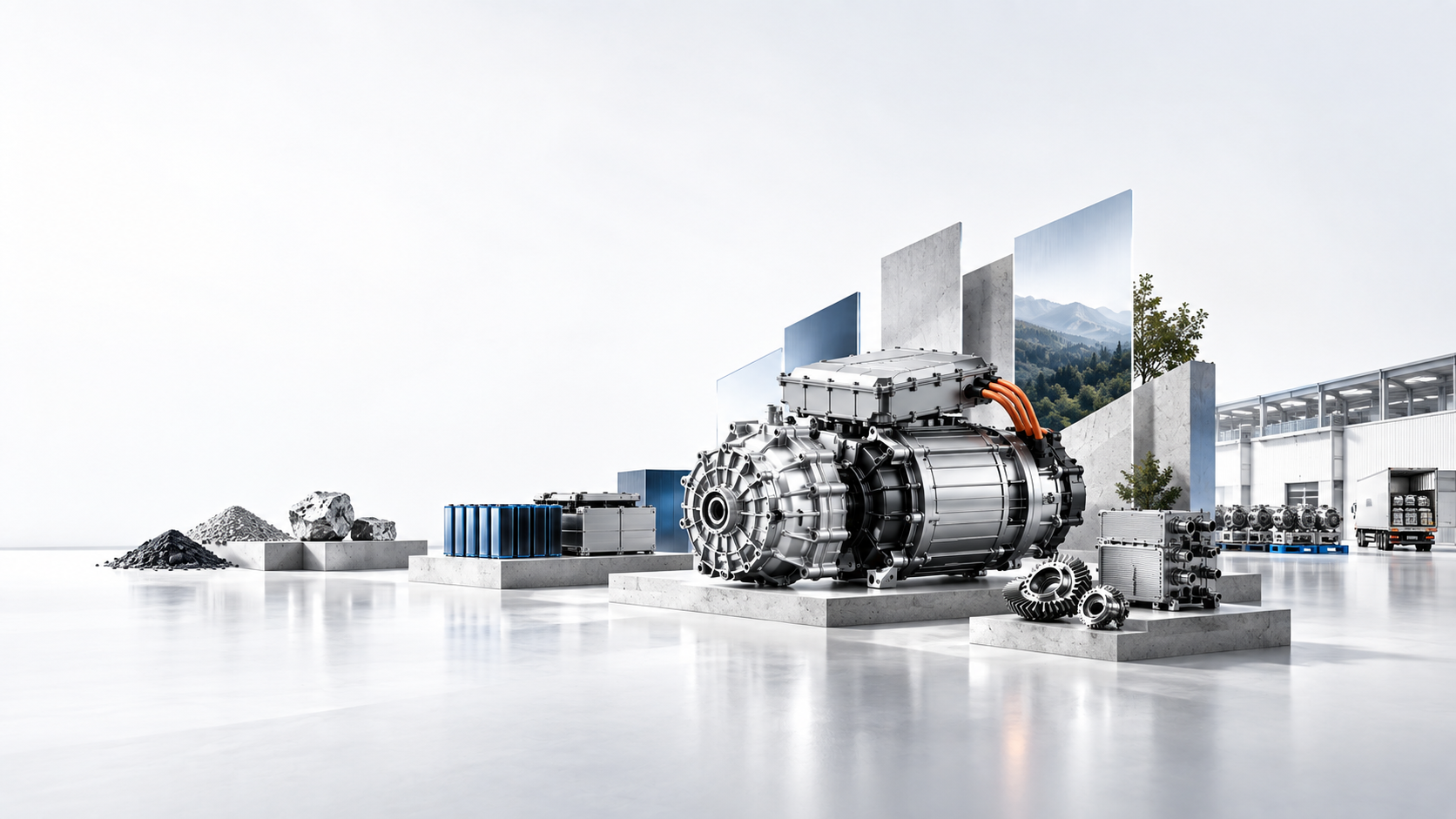
Electric vehicles require more aluminium for battery enclosures, motor housings, inverter casings, and large structural castings that replace steel assemblies. Similarly, industrial equipment, robotics, and power electronics are using aluminium housings for precision, durability, and heat dissipation.
Demand growth is spreading geographically. India, Southeast Asia, and parts of Europe are emerging as key regions due to policy incentives, manufacturing expansion, and diversified sourcing. This creates opportunities for suppliers who combine cost competitiveness with technical and compliance strengths.
The implication is clear: aluminium die casting is no longer a cyclical, volume-driven market. It is becoming a structurally growing industry with long-term visibility into demand.
Technology is now the primary differentiator in die casting. Buyers assess suppliers not just on price and capacity, but also on process maturity, quality consistency, and support for complex, large-format applications.
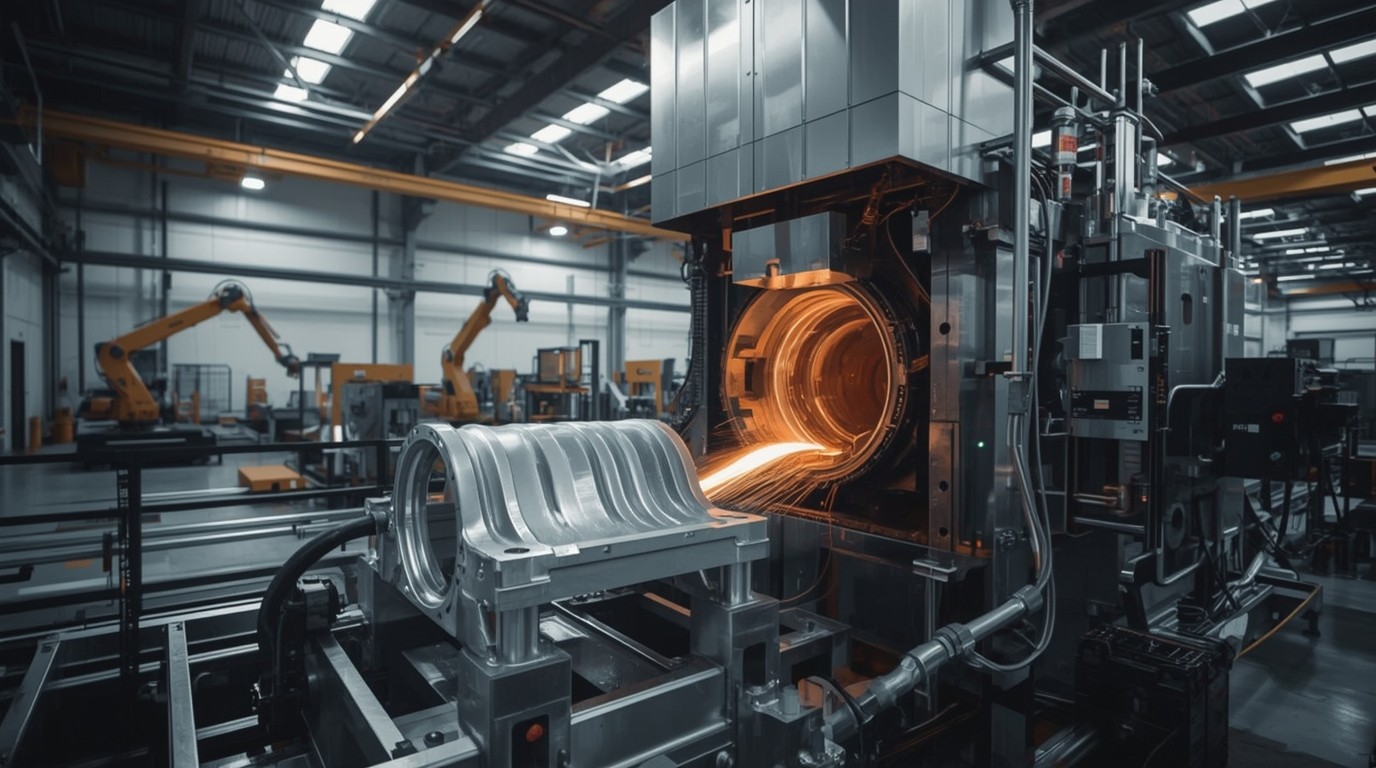
Large-tonnage high-pressure die-casting systems enable integrated structural components that reduce weight, part count, and assembly complexity. Innovations like vacuum-assisted and semi-solid metal casting improve mechanical performance and reduce defects.
Digitalisation enhances these improvements. Advanced inspection systems with imaging and analytics enable near-real-time quality control. Connected equipment, data-driven optimisation, and virtual modelling improve yield, uptime, and predictability.
Early adopters of these technologies improve operations and become more involved in customer design and platform decisions, strengthening long-term relationships and pricing resilience.
The next investment cycle in aluminium die casting will reward strategic clarity over expansion for its own sake. Capacity additions not aligned with future product requirements risk becoming underutilised. Strategic capital deployment is increasingly focused on building capabilities.
Priorities include matching press tonnage to target markets, investing in automation for consistency and scalability, and upgrading die materials and coatings for longer tool life. Investment in digital infrastructure, such as execution systems, traceability platforms, and predictive maintenance, is also becoming a baseline expectation.
Yield improvement and scrap reduction are key value drivers. Advanced process controls and analytics can significantly improve material efficiency and cost competitiveness, often with faster returns than new facility expansion.
The most effective investment strategies integrate technology, data, and people, rather than treating them as separate upgrades.
Regulatory and sustainability requirements are changing how aluminium die-casting operations are evaluated. Compliance now covers energy efficiency, emissions reporting, recycled content, and supply-chain transparency, not just technical standards.
Requirements are tightening across regions. Energy audits, material traceability, and sustainability disclosures are now part of customer qualification processes. For many global buyers, demonstrated compliance is a prerequisite for engagement, not a post-contract consideration.
Forward-looking manufacturers are responding by improving furnace efficiency, increasing recycled aluminium usage, adopting cleaner energy sources, and formalising sustainability reporting. These actions not only reduce regulatory risk but also enhance competitiveness in export markets where environmental performance is closely scrutinised.
In this environment, compliance readiness is best viewed as a strategic investment rather than a cost burden.
Recent disruptions have exposed vulnerabilities in aluminium supply chains. Price volatility, logistics constraints, and geopolitical uncertainty have made resilience as important as cost efficiency.
Leading organisations diversify sourcing between primary and recycled aluminium, hedge against commodity price swings, and localise critical inputs like dies and tooling. Securing alloying elements and strengthening upstream partnerships are also strategic priorities.
Greater transparency and data visibility across the supply chain improve responsiveness and decision-making. Organisations investing in these areas are better able to absorb disruptions without affecting delivery or margins.
Global customers now expect suppliers to maintain consistent standards worldwide. Quality systems, environmental management, and process governance are evaluated alongside cost.
Success in export markets requires repeatable quality, capacity assurance, and operational transparency. Digital traceability, disciplined process control, and skilled engineering teams are essential.
Suppliers who act as long-term manufacturing partners, supporting product evolution and scale-up, achieve better commercial outcomes than those competing only on price.
By 2026, the global aluminium die-casting market is expected to exceed USD 100 billion, with projected growth of 8–10 per cent annually from 2025 to 2030. This expansion is driven by electrification, the adoption of structural casting, and global manufacturing realignment.
Opportunities are not evenly distributed. Value creation will focus on organisations that invest early in advanced casting technologies, expand capacity for future needs, and lead in lightweighting innovation.
The years leading up to 2030 offer a narrow but significant window. Decisions made now will determine whether organisations set industry benchmarks or must adapt to others’ standards.
Strategically, aluminium die casting is among the most attractive industrial growth areas for the next decade. Demand visibility is strong, technology differentiation is increasing, and barriers to entry are rising for late entrants.
Key themes shaping investment attractiveness include the shift toward integrated structural components, the increasing role of digital manufacturing, and the alignment of aluminium with sustainability and localisation agendas.
Velox Consultants supports organisations across this landscape by translating market signals into actionable strategies. This includes growth and market-entry planning, capital allocation and return analysis, technology road-mapping, sustainability readiness, and global customer engagement. The objective is not incremental improvement, but durable competitive advantage built on informed, forward-looking decisions.
The aluminium die-casting industry is entering a period where strategic coherence is as important as operational excellence. Organisations that align market understanding, technology adoption, investment discipline, and governance will be best positioned to lead the industry’s next phase.
The opportunity is substantial, but so is the cost of inaction. The coming years will reward those who act with intent, clarity, and a long-term perspective.
1. Why is aluminium die casting gaining importance across industries?
Because it combines lightweight performance, design flexibility, and scalability, making it suitable for structurally demanding and thermally sensitive applications.
2. What distinguishes advanced die-casting operations from conventional ones?
Advanced operations integrate large-format casting, process automation, digital quality control, and data-driven optimisation into a unified production system.
3. How does electrification influence casting requirements?
Electrification increases aluminium intensity and shifts demand toward larger, more complex, and structurally critical components.
4. What types of investments deliver the strongest long-term returns?
Investments aligned with future product architectures, automation, and yield improvement tend to outperform pure capacity expansion.
5. How are sustainability requirements affecting supplier selection?
Environmental performance and traceability are increasingly embedded in qualification and sourcing decisions.
6. What are the main supply-chain risks for die-casting operations?
Material price volatility, tooling dependencies, and access to specialised alloys are among the most significant risks.
7. How can organisations improve resilience without increasing costs?
Through sourcing diversification, data visibility, and process efficiency rather than redundancy alone.
8. What capabilities are critical for export competitiveness?
Consistent quality systems, digital traceability, compliance readiness, and engineering problem-solving capability.
9. Why is the 2025–2030 period particularly important?
Because structural shifts in technology and demand are occurring simultaneously, creating first-mover advantages.
10. How can external advisors add value in this transition?
By providing independent market insight, disciplined investment frameworks, and execution-focused support.