

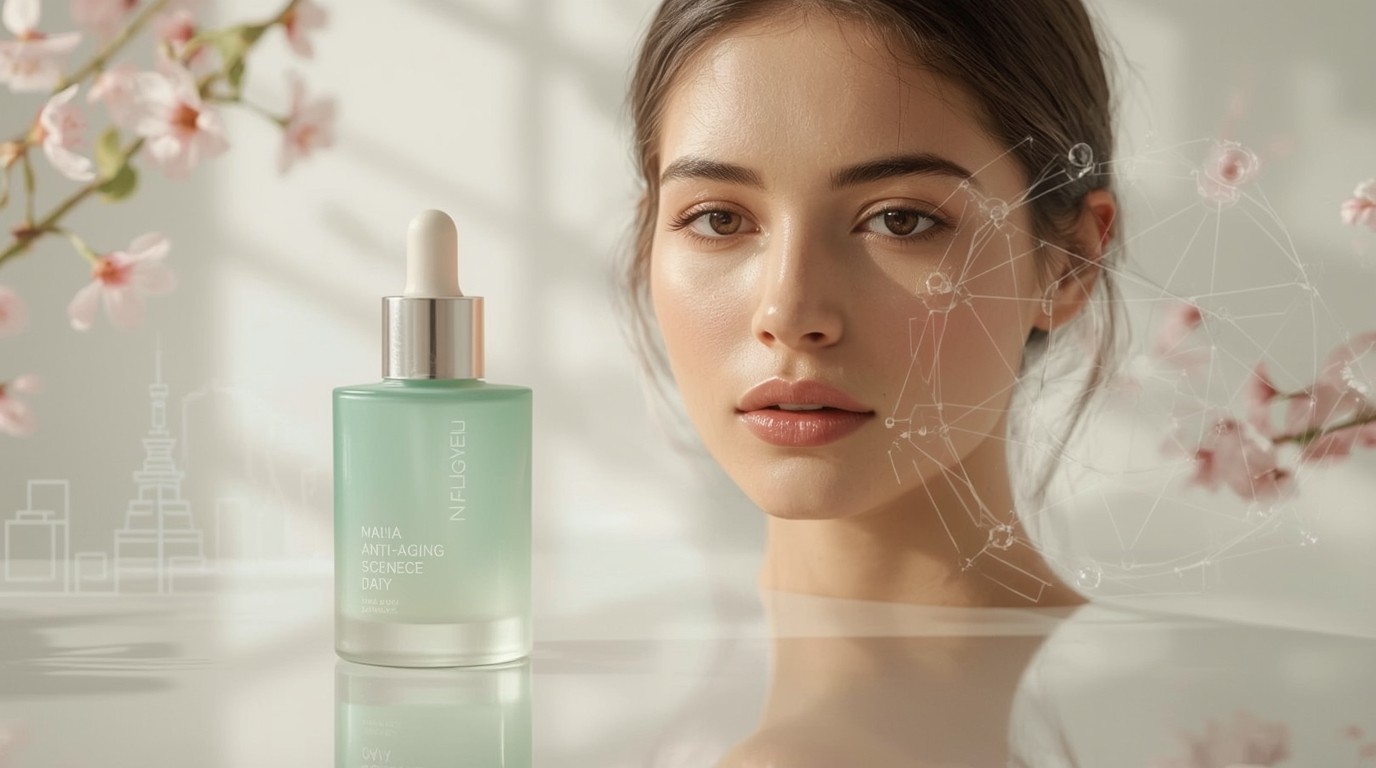
Across the Asia-Pacific, aging is now seen as a deliberate process rather than a decline. The focus has moved from vanity to vitality. In Japan, Korea, China, and India, consumers prioritize extending youthfulness through advanced science and sustainable self-care, rather than hiding age.
By 2030, the APAC anti-aging cosmetics market is projected to reach USD 30-40 billion, growing at a CAGR of more than 8%. This growth reflects a cultural shift toward wellness and technology. In South Korea and Japan, over 60% of young adults in their 20s invest in preventive serums, supporting early adoption. South Korea is expected to grow at 7-8%, driven by technology, while Japan’s 6-7% growth is underpinned by precision research. China and India capture 25% and 18% of the market, fueled by digital adoption and a rising middle class.
A decade ago, anti-aging products focused on eliminating visible signs of aging. Today, consumers seek resilience rather than reversal.
In cities like Seoul and Singapore, skincare routines are now wellness rituals. Younger consumers are adopting preventive care early, known as prejuvenation. In India and Vietnam, aging is linked to both health and appearance.
This shift in consumer behaviour is driving market growth. Brands that recognize beauty is now defined by how skin feels, rather than solely by appearance, are building stronger, long-term customer loyalty.
The APAC anti-aging market is more than a fast-growing category; it’s a compounding ecosystem. Growth over the next decade will be driven by ongoing cycles of innovation, trust, adoption, and reinvestment.
China leads the market, driven by digital adoption and clinical skincare demand, aided by strong long-term orientation and innovation. Brands like Pechoin and Chando dominate with digital and innovative products. Japan excels in efficacy and precision, leveraging its research credibility. Shiseido and SK-II use strong reputations for continued leadership. South Korea is advancing rapidly, exporting K-beauty globally through brands like Amorepacific and Laneige. India’s growing middle class supports the rise of Ayurveda-inspired brands such as Himalaya Herbals and Forest Essentials.
Dermocosmetics, which combine dermatology and cosmetics, are gaining traction across these markets. Brands such as Shiseido, Innisfree, and Forest Essentials are blending tradition with biotech, creating a market that values both science and heritage.
In dynamic APAC markets, the convergence of multiple growth drivers offers investors and founders a rare but time-sensitive opportunity. Delaying action may result in losing market share to companies already securing genomic skincare patents and innovative IP. Key risks include intellectual property disputes, evolving regulatory frameworks, and rapid market saturation. This favorable period, predicted to last 3 to 5 years, is a critical window in which investors must act decisively now to capture market-entry benefits and mitigate risks before barriers rise.
This is an inflection point. Act decisively now: investors must move swiftly from interest to commitment to secure an early advantage.
Founders: immediately integrate technology with tradition, seek partnerships with academia and biotech firms, and begin building scalable science platforms now. Investors: prioritize due diligence on biotech startups, attend APAC beauty innovation events, and forge alliances with promising brands to guide strategy and lead this market transformation.
Clean beauty has shifted from being a differentiator to an expectation. Consumers now seek not only natural ingredients but also traceability.
APAC consumers increasingly ask about ingredient sourcing and environmental impact. Brands that clearly explain each ingredient’s purpose, not just list them, will stand out.
Starting in 2025, proof will matter more than promises. Certification alone won’t suffice; detailed sourcing, peer-reviewed studies, and clinical trials will be expected. Effective, minimal, and circular chemistry will define clean beauty.
APAC’s diverse beauty practices are its greatest strategic advantage.
This cultural depth enables the exchange of ideas across the region. While Western markets discuss skincare innovation, APAC actively demonstrates it, with each culture offering unique approaches to timelessness. For global brands, localization is essential for success in this market.
Reliance on imports is decreasing as APAC countries develop cosmetic biotech clusters, such as South Korea’s Osong Beauty Valley and India’s cosmetic innovation parks.
Local research and development facilities are improving product turnaround times and advancing sustainability. Brands are establishing regional supply chains that utilize green chemistry and biofermentation, reducing dependence on global suppliers.
This approach provides APAC brands with greater agility and cost advantages, which are critical differentiators in a market that values both speed and social responsibility.
Despite growth, there are unmet needs:
Addressing these gaps will create new subcategories, such as men's dermocosmetic and biohacking-inspired skincare, unlocking significant market potential. Startups like 'Manvolution' and 'BioHack Beauty' are gaining attention with innovative, personalized solutions. Recent acquisitions, such as 'NaturAll,' highlight strategic interest. Investors can capitalize by partnering with local brands, pursuing mergers and acquisitions, or supporting early-stage ventures to establish a strong foothold and drive growth.
By 2030, the anti-aging conversation in APAC will shift from reversing the effects of time to respecting the aging process. The most successful brands will treat skin as an ecosystem, not a surface.
They’ll combine biotech precision, sustainability ethics, and cultural storytelling into a unified growth narrative.
Strategists: proactively reposition anti-aging as age-empowering today, driving immediate innovation through empathy-led approaches. Start reframing brand narratives without delay.
At Velox Consultants, we view the APAC anti-aging market as a reflection of fundamental human behaviors: the pursuit of control, confidence, and continuity. With a decade-long track record of guiding successful market strategies in the beauty and wellness sector, our firm has led numerous projects enhancing brand positioning across APAC. For example, our collaboration with a leading Indian skincare brand increased market share by 25% in the second quarter through a localized growth strategy. Key global competitors in the market include established names such as L'Oréal, known for its extensive research capabilities and broad product line, and Estée Lauder, which excels through its luxury positioning and strong brand heritage. Locally, Shiseido stands out for its innovation and precision in product development, while Amorepacific is recognized for rapid trend adaptation and strong digital presence. These differentiators offer investors a benchmark to gauge opportunities and strategize effectively.
Our foresight suggests three strategic opportunities for the decade ahead:
The next beauty revolution in APAC will be defined by principles such as transparency, inclusivity, and cross-disciplinary collaboration, rather than by products alone. For investors, startups, and established brands, now is the time to design with purpose, not just for market opportunity.
What is driving the anti-aging cosmetics market in APAC (2025–2030)?
Growth is driven by consumer wellness awareness, biotechnology innovation, and digital adoption. Aging is now seen as a lifestyle journey rather than a problem to fix.
Which countries lead the APAC anti-aging market?
China, Japan, South Korea, and India dominate, while Southeast Asia is seeing rapid expansion driven by rising disposable incomes and greater e-commerce accessibility.
How are AI and AR shaping the industry?
AI-powered personalization and AR-based skin diagnostics enable tailored regimens, enhancing consumer trust and digital engagement.
What are the emerging investment opportunities?
Biotech actives, microbiome skincare, sustainable formulations, and D2C platforms integrating wellness and personalization are key investable areas.
What role does clean beauty play in APAC’s anti-aging future?
Clean beauty is now a baseline; the next differentiator is transparent, science-backed sustainability merging ethics with efficacy.
How is the market expected to evolve by 2030?
By 2030, APAC will be the global epicenter of anti-aging innovation where technology, culture, and sustainability intersect to create “age-empowering” solutions.