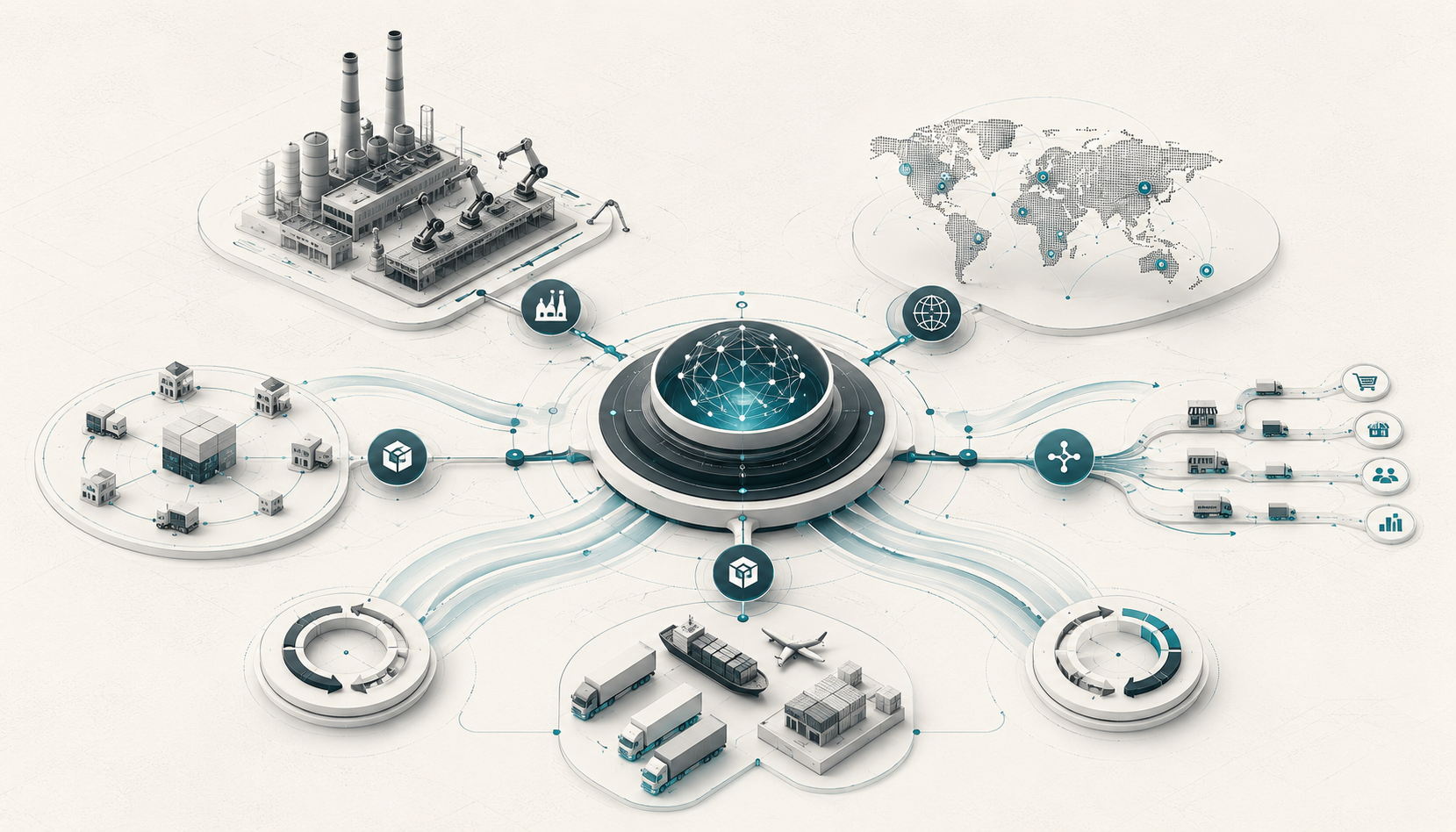

Gujarat Industrial Policy 2026 is a future-oriented industrial framework designed to strengthen advanced manufacturing, innovation, MSMEs, exports, sustainability, and investment-led growth. GARUDA is Velox Consultants’ strategic sector map that helps businesses identify where future industrial demand may emerge across green energy, AI, robotics, infrastructure, defense, aerospace, agriculture, and food processing.

Key Takeaways

  • Gujarat Industrial Policy 2026 should not be viewed only as an incentive document; it is a policy architecture for future-ready industrial growth.
  • Velox Consultants’ GARUDA framework converts policy direction into a practical sector strategy map for MSMEs, investors, exporters, and foreign companies.
  • The strongest opportunities may emerge where Gujarat’s industrial base intersects with future sectors such as clean energy, semiconductors, robotics, drones, logistics, and food processing.
  • MSMEs can use GARUDA to move from low-margin job work to higher-value component manufacturing, export readiness, and technology-led supply chains.
  • Investors should assess capability gaps, certification needs, customer demand, export-market attractiveness, and regulatory requirements before entering any GARUDA sector.

Why Gujarat Industrial Policy 2026 matters now

Gujarat’s new industrial policy is not just an incentive document. It is a future-industry roadmap.

For business owners, MSME founders, manufacturing companies, global investors, and export-oriented entrepreneurs, the key question is no longer only, “What subsidy is available?” The more strategic question is, “Which industries will Gujarat be prepared to scale over the next 5–10 years?”

The Viksit Gujarat Industrial Policy 2026 provides the policy architecture. It emphasizes industrial competitiveness, value addition, advanced manufacturing, sustainability, MSME scale-up, startup support, R&D, infrastructure, and global value-chain integration.

Velox Consultants’ GARUDA framework provides the sector strategy map. It helps companies decode where future demand may emerge and how existing factories, new investors, and export-focused manufacturers can align with the next industrial cycle.

Together, Gujarat Industrial Policy 2026 and GARUDA show how Gujarat can move from traditional industrial strength to export-ready, technology-led, MSME-inclusive growth.

What changed with Viksit Gujarat Industrial Policy 2026

The Viksit Gujarat Industrial Policy 2026 is designed for a five-year policy period starting from June 2026, with a broader vision aligned to Viksit Gujarat and Viksit Bharat @2047.

In business language, the policy reflects seven major shifts.

From incentive-led growth to future-sector growth

The policy identifies high-growth thrust sectors and selected thrust sectors. These include areas such as green energy, mobility, capital equipment, textiles, agro processing, healthcare, semiconductors, nuclear power equipment, recycling, shipping containers, heavy equipment, sports goods, toys, footwear, robotics, and drones.

This matters because Gujarat is not only supporting existing industrial activity. It is also signaling which sectors can become the next base for investment, supplier development, and export competitiveness.

From low-margin manufacturing to value-added manufacturing

The policy emphasizes technology-intensive industries, innovation, R&D, productivity, and global competitiveness. This is relevant for MSMEs that currently work as vendors, subcontractors, fabricators, or job-work suppliers.

The opportunity is to move up the value chain by diversifying products, obtaining certifications, automating processes, strengthening quality systems, and improving customer access.

From domestic production to global value-chain participation

The policy’s direction is aligned with “Local to Global” thinking. For export-oriented manufacturers, this means Gujarat’s next industrial phase will require not just production capacity but also readiness among international buyers, quality compliance, ESG alignment, country-specific certifications, and reliable documentation.

From isolated factories to industrial ecosystems

The policy highlights infrastructure, GIDC estates, industrial parks, logistics connectivity, Special Investment Regions, R&D parks, and common support facilities. This ecosystem approach is important for foreign investors and industrial park developers evaluating Gujarat as a manufacturing or sourcing base.

From MSME survival to MSME scale-up

The policy recognizes MSMEs as central to Gujarat’s industrial ecosystem. It includes support areas such as quality certification, ZED certification, ERP, ICT implementation, technology acquisition, patent support, energy and water efficiency, SME exchange, power connection support, rent assistance, and market development support.

Companies should verify all scheme-level eligibility and application conditions from the official policy document before making investment decisions.

From startup encouragement to industrial innovation

Startup support, R&D promotion, innovation parks, Centers of Excellence, pilot infrastructure, incubation, and technology commercialization are important signals. Gujarat is positioning innovation not only as a software activity but also as an engine of industrial growth.

From industrial expansion to sustainable industrialization

The policy includes environmental stewardship, cleaner production, common environmental infrastructure, circular economy, waste management, and green manufacturing. This will matter increasingly for export markets where buyers demand sustainability, traceability, quality, and compliance.

What is the GARUDA framework?

GARUDA is Velox Consultants’ strategic framework for decoding future industrial demand.

It is not just an acronym. It is a practical strategy map for business owners, MSMEs, investors, industrial groups, startups, and global companies evaluating Gujarat.

GARUDA stands for:

G — Green Energy & Clean Technologies

A — AI, Automation & Digital Industrial Systems

R — Robotics, Semiconductors & Advanced Manufacturing

U — Urban Infrastructure, Logistics & Industrial Infrastructure

D — Defense, Drones & Aerospace

A — Agriculture, Food Processing & Resource Security

GARUDA is especially useful for existing factories looking to add new product lines, MSMEs seeking modernization, investors planning new manufacturing setups, global companies evaluating Gujarat, and export-focused businesses identifying country-specific demand.

GARUDA Sector Opportunity Analysis: Where Gujarat’s Future Industrial Demand Can Emerge

GARUDA helps companies translate the Gujarat Industrial Policy 2026 from a policy document into a practical opportunity map. The framework is useful for MSMEs planning modernization, manufacturers exploring adjacent product lines, investors evaluating new plants, foreign companies assessing Gujarat as a sourcing base, and exporters identifying future demand corridors.

G — Green Energy & Clean Technologies

Green energy is one of Gujarat’s strongest future industry opportunities because it connects renewable power, industrial decarbonization, EV components, battery systems, clean technologies, and circular-economy solutions to the state’s existing manufacturing and port-led industrial base.

Key opportunity areas include:

  • Solar structures, module-support components, cable assemblies, inverters, control panels, battery enclosures, EV charging components, valves, skids, and renewable-energy support systems.
  • New manufacturing or assembly opportunities in battery packs, hydrogen-ready equipment, electrolyzer support components, smart meters, energy-storage integration, and waste-to-resource facilities.
  • Export potential across the USA, Europe, GCC, ASEAN, Japan, South Korea, and Africa, depending on product category, quality requirements, and buyer qualification.
  • Country-specific checks should include electrical safety standards, product testing, grid compatibility, ESG expectations, environmental norms, packaging rules, and technical documentation.
  • Readiness gaps may include access to testing, certification, technology capabilities, skilled workforce, vendor approval, working capital, export documentation, and customer discovery.

A — AI, Automation & Digital Industrial Systems

AI and automation should be seen as the productivity layer of Gujarat’s manufacturing future. This opportunity is not limited to software; it includes the systems, sensors, data infrastructure, control panels, and digital workflows that make factories more efficient, traceable, and export-ready.

Key opportunity areas include:

  • PLC panels, automation retrofits, sensor networks, machine monitoring, digital dashboards, industrial IoT, quality analytics, energy monitoring, and predictive maintenance systems.
  • New setup opportunities in automation integration centers, AI-enabled inspection labs, machine-vision services, control-panel manufacturing, industrial IoT device assembly, and digital factory implementation.
  • Export potential in industrial software support, automation engineering, remote monitoring, digital factory services, and AI-enabled manufacturing productivity tools.
  • Country-specific checks should include cybersecurity norms, data protection rules, machine safety requirements, industrial compliance, AI governance expectations, and buyer-specific validation.
  • Readiness gaps may include digital maturity, integration skills, cybersecurity readiness, software reliability, implementation talent, machine compatibility, after-sales support, and product-market fit.

R — Robotics, Semiconductors & Advanced Manufacturing

Robotics, semiconductors, electronics, precision engineering, and advanced manufacturing can help Gujarat move from conventional industrial strength to higher-value, technology-led production. This sector is especially relevant to companies with capabilities in machining, electronics, tooling, chemicals, fabrication, industrial machinery, or auto components.

Key opportunity areas include:

  • Robotics parts, precision components, cleanroom support products, ESD-safe packaging, jigs and fixtures, testing fixtures, high-purity piping, electronic enclosures, calibration services, and advanced tooling.
  • New setup opportunities in robotics component units, semiconductor ancillary units, electronics assembly, precision machining centers, cleanroom consumables, testing labs, and smart-factory support facilities.
  • Export potential across the USA, Europe, Japan, South Korea, Taiwan, ASEAN, and GCC for precision parts, electronics support, semiconductor ecosystem products, and advanced manufacturing services.
  • Country-specific checks should include ESD requirements, cleanroom norms, RoHS/REACH expectations, semiconductor-grade purity standards, traceability, buyer audits, and process documentation.
  • Readiness gaps may include precision capability, process control, cleanroom readiness, skilled workforce, testing infrastructure, quality certification, supplier approval, technology partnerships, and capital intensity.

U — Urban Infrastructure, Logistics & Industrial Infrastructure

Future industries do not scale without strong physical infrastructure. Gujarat’s ports, GIDC estates, industrial parks, logistics corridors, land banks, water systems, worker housing, warehouses, cold chains, and industrial services ecosystem can become a major advantage for manufacturing-led growth.

Key opportunity areas include:

  • Industrial park services, warehousing, HVAC, fire safety, electrical systems, water-treatment systems, packaging, material handling, facility management, transport support, and manufacturing-cluster services.
  • New setup opportunities in logistics parks, bonded warehousing, cold-chain hubs, export packaging units, industrial maintenance centers, water-treatment facilities, common testing facilities, and data-center support services.
  • Export potential through EPC services, engineering services, logistics solutions, industrial systems, project management, and infrastructure support across GCC, Africa, ASEAN, South Asia, and other growth regions.
  • Country-specific checks should include construction codes, fire safety rules, electrical standards, environmental requirements, customs processes, warehousing regulations, and project qualification criteria.
  • Readiness gaps may include project execution capability, safety compliance, financing, large-account selling, technology integration, logistics partnerships, contract readiness, and international documentation.

D — Defense, Drones & Aerospace

Defense, drones, aerospace, and space-linked manufacturing can create higher-value opportunities for Gujarat’s precision engineering, electronics, composites, machining, embedded systems, and advanced manufacturing ecosystem. This sector offers attractive margins but requires stronger compliance and longer qualification cycles.

Key opportunity areas include:

  • Drone frames, rugged enclosures, wiring harnesses, actuators, fasteners, machined components, sensors, battery packs, testing fixtures, ground-support equipment, and composite components.
  • New setup opportunities in drone assembly, aerospace component machining, defense-electronics assembly, composite facilities, UAV testing centers, simulation support, and MRO-linked services.
  • There may be export potential in regulated defense and aerospace markets such as the USA, Europe, GCC, ASEAN, Africa, and partner countries, subject to approvals and buyer qualification.
  • Country-specific checks should include export controls, defense procurement norms, aviation safety standards, end-user documentation, cybersecurity requirements, traceability, and product testing.
  • Readiness gaps may include certification readiness, export-control awareness, documentation discipline, traceability, cybersecurity, product reliability, quality systems, a skilled workforce, capital requirements, and long buyer approval cycles.

A — Agriculture, Food Processing & Resource Security

Agriculture, food processing, cold chains, agri-tech, packaging, water efficiency, and resource-security-linked businesses can help Gujarat move from commodity trade to processed, certified, traceable, and export-ready value chains.

Key opportunity areas include:

  • Value-added food products, ingredient processing, grading, dehydration, freezing, testing, cold-chain services, export packaging, shelf-life improvement, food-processing machinery, and agri-waste valorization.
  • New setup opportunities in food-processing plants, dehydration units, frozen food facilities, spice and ingredient processing units, cold-chain hubs, quality testing labs, export packaging units, and resource-efficiency solutions.
  • Export potential across GCC, USA, Europe, Africa, ASEAN, Japan, and South Korea, depending on product category, consumer demand, distributor access, and compliance requirements.
  • Country-specific checks should include food safety rules, labeling requirements, residue limits, packaging norms, shelf-life documentation, traceability expectations, import regulations, and buyer-specific requirements, such as halal certification where relevant.
  • Readiness gaps may include food-safety certification, cold-chain reliability, packaging quality, product standardization, traceability, access to testing, export documentation, buyer discovery, distributor access, working capital, and compliance readiness.

Why global investors should evaluate Gujarat

Global firms evaluating India need to assess Gujarat through a practical operating lens, not just a policy lens.

Gujarat offers a strong industrial base, port-led trade orientation, manufacturing culture, supplier networks, GIDC estates, Special Investment Regions, policy support, logistics connectivity, and export orientation. These factors matter to companies seeking India-based manufacturing, sourcing, joint ventures, supplier development, or participation in industrial parks.

Foreign companies should evaluate Gujarat for six GARUDA-aligned opportunities:

  • Green energy components — renewable equipment, EV components, battery support systems, hydrogen-ready equipment, and industrial decarbonization solutions.
  • Semiconductors and electronics — ancillary units, cleanroom support, precision parts, electronics assemblies, and testing services.
  • Robotics and industrial automation — factory automation, control systems, robotics components, machine vision, and digital manufacturing systems.
  • Drones, aerospace, and defense supply chains — dual-use precision manufacturing, drone components, aerospace assemblies, and rugged electronics.
  • Food processing and agri-value chains — processed food, cold chain, export packaging, food safety, and value-added agri products.
  • Industrial infrastructure and logistics — logistics parks, warehousing, water systems, data-center support, and industrial services.

The key investor question is not only “Is Gujarat attractive?” It is “Which cluster, supplier ecosystem, customer base, workforce pool, and export market match our investment model?”

How MSMEs can move from job work to future-ready supply chains

Gujarat’s MSMEs have a practical opportunity to reposition themselves. Many currently operate as job-work units, small vendors, local fabricators, subcontractors, or low-margin suppliers.

GARUDA helps MSMEs identify where they can move next.

  • Product diversification: MSMEs should identify adjacent products linked to their existing capabilities. A fabrication unit can explore renewable skids, battery enclosures, industrial frames, drone ground-support equipment, or food-processing structures. An electrical panel maker can move into automation panels, EV charging support, smart-grid components, or data-center systems.
  • Component manufacturing: Future sectors need components before they need complete systems. MSMEs can participate by providing parts, assemblies, test fixtures, tooling, enclosures, cables, packaging, calibration, and maintenance services.
  • Quality certification: Export-ready manufacturing requires quality systems, documentation, traceability, product testing, and readiness for buyer audits. Certification should be seen as a growth investment, not a compliance burden.
  • Export readiness: MSMEs must assess target-country demand, buyer expectations, labeling, packaging, documentation, import norms, logistics, payment terms, and distributor models before exporting.
  • Digital process improvement: ERP, ICT, production monitoring, quality dashboards, and digital documentation can help MSMEs improve productivity and qualify for more demanding customers.
  • Customer mapping: The biggest mistake MSMEs make is investing in machinery before validating demand. Before entering a GARUDA sector, companies should map buyers, competitors, distributors, system integrators, OEMs, EPC players, and export channels.
  • Strategic partnerships: MSMEs may need technology partners, testing partners, channel partners, export distributors, or to enter into joint ventures. Partnerships can reduce time-to-market and improve credibility.
  • Moving from vendor to value-chain participant: The future-ready MSME will not only accept drawings and execute job work. It will understand the value chain, customer pain points, certification pathway, product economics, and export potential.

Velox Consultants perspective

At Velox Consultants, we see the Gujarat Industrial Policy 2026 and GARUDA as complementary tools for decision-making.

The policy creates the industrial architecture. GARUDA helps companies translate that architecture into sector choices, product decisions, market-entry plans, export priorities, and capability upgrades.

Velox works with SMEs, MSMEs, startups, foreign investors, industrial groups, and manufacturing companies to evaluate opportunities across future-ready sectors. Our role is not to act as a subsidy consultant. Our role is to help companies make better decisions about markets, customers, competitors, products, and investments before committing capital.

Relevant Velox capabilities include:

  • Market Intelligence & Opportunity Radar — identifying where demand is emerging across GARUDA sectors.
  • Growth Strategy & Revenue Acceleration — helping companies prioritize products, customers, channels, and revenue models.
  • Customer Intelligence & Demand Strategy — validating buyer needs, adoption barriers, and target segments.
  • Competitive Intelligence & Strategic Benchmarking — comparing competitors, pricing, capabilities, and market positioning.
  • Business Model Innovation & Future-Ready Strategy — helping companies move from job work to differentiated value propositions.
  • MSME Modernization & Export Growth Advisory — supporting capability upgrades, export-market prioritization, and global buyer readiness.

Velox helps companies answer practical boardroom questions:

  • Which GARUDA sector is most relevant to our current factory?
  • Which product line should we add next?
  • Which export markets are most attractive?
  • Which countries require which certifications?
  • Who are the potential customers, competitors, and channel partners?
  • What capability gaps must be closed before investment?
  • Should we modernize, diversify, export, partner, or set up a new plant?

Request a GARUDA Readiness Discussion for your sector, factory, or investment plan.

FAQs

What is the Viksit Gujarat Industrial Policy 2026?

The Viksit Gujarat Industrial Policy 2026 is Gujarat’s five-year industrial policy framework focused on future-ready manufacturing, MSME scale-up, startups, R&D, industrial infrastructure, sustainability, exports, and global investment. It is designed to support Gujarat’s transition toward advanced, innovation-led, and globally competitive industrial growth.

How can MSMEs benefit from the Gujarat Industrial Policy 2026?

MSMEs can benefit through policy support for modernization, quality certification, ZED certification, ERP, ICT adoption, technology acquisition, patent support, energy and water efficiency, market development, and export readiness. Companies should verify the detailed eligibility criteria and scheme rules in the official policy document before applying.

What is the GARUDA framework?

GARUDA is Velox Consultants’ future-industry strategy framework. It maps six growth sectors: Green Energy, AI and Automation, Robotics and Advanced Manufacturing, Urban Infrastructure, Defense and Aerospace, and Agriculture and Food Processing. It helps companies identify where future industrial demand may emerge.

Which future sectors can grow in Gujarat under GARUDA?

The GARUDA sectors most relevant to Gujarat include green energy, clean technologies, AI-led industrial systems, robotics, semiconductors, electronics, logistics, industrial infrastructure, drones, aerospace, defense manufacturing, food processing, cold chains, and agri-value chains.

How can existing factories enter green energy or advanced manufacturing supply chains?

Existing factories should start with product adjacency. They can identify components, assemblies, fabrication parts, electronics, testing services, control panels, enclosures, tooling, or maintenance services linked to green energy or advanced manufacturing. The next steps are customer validation, certification planning, and capability gap analysis.

What should MSMEs check before entering export markets?

MSMEs should assess market demand, buyer qualification criteria, country-specific certifications, import regulations, quality standards, labeling and packaging, ESG expectations, logistics costs, payment terms, working capital needs, and distributor reliability before entering export markets.

Why should foreign investors evaluate Gujarat for manufacturing?

Foreign investors should evaluate Gujarat because of its industrial base, ports, manufacturing culture, supplier ecosystem, GIDC estates, Special Investment Regions, policy support, logistics connectivity, and export orientation. Gujarat is especially relevant for advanced manufacturing, green energy, electronics, food processing, and industrial infrastructure.

How can Gujarat MSMEs move from job work to export-ready manufacturing?

Gujarat MSMEs can move from job work to export-ready manufacturing by diversifying products, improving process quality, adopting digital systems, building certification readiness, mapping global buyers, benchmarking competitors, strengthening documentation, and forming strategic partnerships with technology or export-channel partners.

How can Velox Consultants help MSMEs identify opportunities in the GARUDA sector?

Velox Consultants helps MSMEs evaluate which GARUDA sector fits their existing capabilities. Velox supports opportunity assessment, product adjacency mapping, customer intelligence, competitor benchmarking, export-market prioritization, capability-gap analysis, and go-to-market strategy.

How can Velox Consultants support foreign investors evaluating Gujarat?

Velox Consultants helps foreign investors with Gujarat market intelligence, sector attractiveness analysis, supplier and customer mapping, competitor benchmarking, location and cluster assessment, partnership identification, export market evaluation, and feasibility support before market entry or plant setup.


Tags
Market Research Technology Marketing Strategy AI Market Analysis Manufacturing Healthcare Fintech Retail Velox Consultants Sustainable Energy Renewable Energy MSME Growth MSMEs in Smart Manufacturing Telemedicine Future Of Healthcare IoT Pharmaceutical Food MSME Clusters Clean Energy Sustainability Metaverse cleantech Consumer Goods Automotive Power FMCG India India FMCG Strategy Sustainability in MSME Industry 4.0 Digital Twin India Smart Factory Market Next-Generation Sequencing Space net zero by 2030 D2C Healthcare industry Artificial Intelligence Retail Marketing Distributed Energy Resources (DER) Branding Agriculture Infrastructure Market Research India Supply Chain Resilience MSME Growth Strategy FMCG Strategy Global FMCG Trends FMCG Market Research Data Centres & AI Compute Growth Velox Ascent Matrix SME & MSME Consulting Growth Strategy 2025 Delhi FMCG strategy Consumer Insights Velox Framework Growth Strategy MSME Strategy agri business models agri-tech innovation Retail Innovation Velox Insights Consumer Intelligence market research for SMEs Healthcare Trends Green Practises in MSMEs Regional MSME Clusters Digital Transformation Advanced Manufacturing smart factory Market research trends AI in market research Predictive analytics Quick Commerce Medical Equipment AI in Healthcare Electronic Manufacturing Service Genomic Sequencing CRISPR Gene Editing COP 28 Product Market Fit Strategy D2C Strategy DeepTech Quantum Computing Biotechnology Space Mining Satellites Bio-fabrication in Space Wearable medical devices Generative AI green hydrogen production future of hydrogen energy Advantages of Hydrogen for Power Generation Hydrogen Production Hydrogen Policy Cybersecurity Engineering smart mobility Supply Chain Entertainment CPG BFSI zero carbon emission wealthtech Insurtech Neo Bank Online Food Delivery Health and wellness Telecom MSME modernization GARUDA framework Viksit Gujarat Gujarat Industrial Policy 2026 advanced manufacturing Gujarat green energy Gujarat foreign investment in Gujarat export growth Gujarat manufacturing MSME investor due diligence supplier readiness framework future-ready MSMEs Supply chain diversification India working capital resilience SME resilience India cost-center productivity India MSME resilience defense tech MSMEs critical minerals recycling green hydrogen MSMEs semiconductor supply chain India AI infrastructure suppliers Distributed Manufacturing growth strategy consulting quick commerce strategy India manufacturing food processing Business Transformation Strategy future of consulting 2026 SME growth in India AI in Strategy Consulting Performance-linked consulting Go-to-Market Execution CXO decision-making management consulting trends FMCG Growth Strategy AI in FMCG Demand Fragmentation Regional Branding SKU Optimization Kirana Distribution Tier 2 & Tier 3 Markets Micro-Market Strategy FMCG Innovation Precision Marketing Hyperlocal Marketing India Retail 2025 Vietnam industrial zones Vietnam market entry Vietnam supply chain Vietnam investment guide Vietnam manufacturing investing in Vietnam ASEAN manufacturing India Economy India-UAE Trade MSME Growth 2026 Defence Tech AI for Business Geopolitical Risk Geopolitics & Trade Government Incentives Industry 5.0 2026 Manufacturing Trends Robotics & Cobots OEM Strategy Manufacturing Strategy Industrial Automation Reshoring & Nearshoring AI in Manufacturing Atmanirbhar Bharat India Pharma 2026 Green Energy India Semiconductor India Consumption to Capability India Business Strategy Viksit Bharat India Economy 2026 b2b-growth-strategy global-market-entry middle-east-market cross-border-trade india-export-strategy gcc-expansion abu-dhabi-investment dubai-business-opportunities uae-market-entry india-uae-business Supply Chain Localization Export-Oriented Manufacturing Engineering Goods India Pharma & Chemicals Manufacturing Industrial Policy India 2026 Manufacturing Investment India Gujarat Industrial Clusters India Manufacturing Corridor Europe expansion strategy for Indian companies Growth strategy for international market entry Market research for Europe expansion India Europe market entry strategy ESG compliance for Europe exports India Europe FTA sectors analysis AI Infrastructure Strategy Global AI Data Centers AI Investment & M&A Enterprise Digital Infrastructure India AI Infrastructure Sovereign AI & Policy Power & Cooling Constraints Hyperscale & Colocation Data Center Market Research Functional Beverages Export Market Intelligence Consumer Health Trends Food & Beverage Strategy Preventive Health Nutrition Beverage Industry Trends Gut Health Beverages Ayurveda Export Market Wellness Drinks EV Aluminium Components Export Ready Manufacturing Structural Aluminium Castings Global Aluminium Supply Chain Low Carbon Aluminium Sustainable Aluminium Manufacturing Manufacturing Capacity Expansion Aluminium Battery Enclosures Lightweight Automotive Materials Advanced Die Casting Technologies Large Format Die Casting Die-Cast Aluminium Market High Pressure Die Casting business growth trade policy impact international market entry strategy manufacturing expansion, export growth opportunities global sourcing shift international procurement tariff disruption strategy export diversification global value chains Smart Manufacturing Innovation Acceleration Future of Work AI Strategy Enterprise AI Adoption Autonomous Intelligence Agentic AI Autonomous Operations Digital Cosmetics Clean Beauty Beauty & Wellness Anti-Aging APAC Market Cosmetic Trends 2030 Sustainable Skincare AI in Beauty Skincare Innovation GLP-1 Supply Chain Innovation Functional Foods Consumer Behavior Satiety Economy Supplier and distributor intelligence Vendor Intelligence B2B Market Research Engineering Product Market Research Energy Market Research Healthcare Market Research Functional Foods & Agri Innovation Green Hydrogen & Clean Energy Transition EVs & Battery Circular Economy India Semiconductor & Electronics Manufacturing India AI SaaS & MSME Digitization India Investment Opportunities Boardroom Strategy India India 2026 Growth Playbook ClimateTech & Carbon Markets India Healthcare & MedTech India 2026 Telecom 6G Telecom 5G EV Mobility AI Chips India Semiconductor Market Semiconductors Green Energy Healthcare Tech Emerging Markets Smart Factories Cobots over Robots Energy Reliability Gap Green Electricals Electricals Automation Smart Cities Green Transport PM E-Drive Battery Swapping Charging Stations India Mobility EV Infrastructure Electric Vehicles Smart meters and IoT Energy storage and AI Clean energy transition AI smart grids Power sector transformation Farmer Empowerment Rural India Pharma Engineering CMO Insights Strategic Consulting for Manufacturers MSME Strategy UAE Marketing Transformation Chennai beauty market trends Ahmedabad regional GTM Personalized Wellness Mumbai CPG personalization Regional Marketing Primary Research CPG Trends 2025 India personalization expert Tier 2 CPG insights green hospitals quantum-AI drug discovery bio-digital twins global health trends sustainable healthcare systems quantum AI healthcare regenerative medicine insights digital health innovation healthtech trends 2030 Business Transformation Retail Growth Strategy Consumer Product Strategy B2B Strategy Growth Matrix Startup Consulting Sustainable Growth nutraceutical exports supply chain in agriculture functional food market wellness foods food-tech sourcing India nutrition economy bio-fortified crops Functional agriculture Smart Retail AI in Business Future Of Commerce India Retail Trends Retail Growth 2025 Retail Growth Retain AI Zero Defect Zero Effect National Digital Twin Predictive Manufacturing Simulation Tech Strategic Foresight SME Insights MSME Insights Healthcare Technology Minimally Invasive Surgery Surgical Robotics Future of Surgery Healthcare Investments Medical Innovation Robotic Surgery AI Investment Union Budget 2025 Export DAVOS 2025 economic resilience Intelligent Manufacturing Sustainable Mobility Global Business Trends MSME Export Trends Government Schemes for MSMEs Indian Economy Cloud Computing Smart Factory Technologies Manufacturing Excellence Biologics CRISPR-Cas9 AI in Pharma Pharmaceutical Engineering Pharmaceutical Market Trends Sustainable Pharma Advanced Drug Delivery Biosimilars Digital qualitative research Market intelligence Ethical research Real-time insights AI in Green Finance Blockchain for Sustainability Eco-friendly Investments Sustainable Finance Green Fintech Energy Efficiency Smart Grids Nanomaterials Nanomedicine Nanotechnology Nano-Fertilizers Nanofabrication Carbon Nanotubes Quantum Dots Nanobots E-commerce Data Driven Personalization MedTech Personalized Medicine Digital Health 3D Printing in Healthcare Robotics in Surgery Healthcare Innovation Carbon Storage System Carbon capture technology Robo Advisor Insurance Finance Banking Biotech CRISPR DigitalTherapeutics Contactless Payments Open Banking Traditional Banking Embedded Finance Decentralized Finance Pharma Innovation Digital Therapeutics Patient Engagement Pharma CX Green Technology Mass Customization Green Electronics Micromobility Vehicle-to-grid (V2G) technology Wireless Charging Battery Advancements Powertrain Optimization Emobility Collaborative Robots Microfactory Pharmacogenomics Disease Prediction Personalised Medicine Genomics Bioinformatics Carbon Capture and Removal Sustainable Transportation Circular Economy ClimateTech Market-Fit Strategy Human-Machine Interaction Digital Thread Edge Computing Genetic Engineering 3D Bio Printing Space Tourism Aerospace Organ Transplantation Customised Implants Customised Prosthetics Disease Modeling Regenerative Medicine Tissue engineering Wearable health Telehealth Mental health monitoring Fall detection Pregnancy monitors Blood pressure monitors ECG monitors Product Design Content Creation chatgpt WEB 3.0 Invest India India Market ESG startups Electronic Waste Construction Waste Agriculture Waste Water Waste Renewable Energy Waste Plastic Waste Semiconductor Use Semiconductor Transport Surveillance Security Logistics drone technology Innovation Virtual Factory nft ev battery recycling co2 emissions automotive and transporat EV Charging Station Electric Car Charger Charging Car Nordics Robo-Advisor Digital Banking Cloud Kitchen B2B virtualclassrooms elearning education edtech Telemedicine Market Size Telemedicine Market Growth Telemedicine Market Telemedicine Benefits Reshape the Healthcare Internet of Things 3-D Printing Textile Crude Steel Automobile Capital goods Steel Airports Customer Acquisition Tractor IT Pricing Strategy 5 Cs PESTEL Analysis SWOT Analysis 8 Ps